Who Invented Marketing

We often get attached to individual terms like brand manager, advertising director, or marketing strategist. But what about the person who did not have a title but was still very influential? What about the person who did not have an official position at a company, but left an impact that continued to ripple across the landscape of marketing?
The term “marketer” is now almost universally accepted as referring to anyone in the business of promoting products and services. Even those who do not use the word marketer understand the concept of marketers — we all know someone (or maybe even several people) who fits this description.
However, until relatively recently, there was no widely-accepted definition for the term “marketing.” According to Merriam-Webster, the word comes from the Latin word mare meaning sea and gens which means tribe, clan, or nation. Thus, according to MW, the word refers to “the activity of seeking out potential customers by offering your goods or services at a discount, keeping up continuous relationships with these customers, and developing strategies to increase sales”.
This seems rather broad, so let us zoom in and see if we can identify some key individuals who fit the mold.
First off, you have to acknowledge that Henry Ford was one of the first true marketers. He marketed his cars through advertisements, media relations, and direct interactions with consumers.
David J. Sarnoff

As we know, marketing is more than just promoting products and services. It’s much bigger than that! It’s creating relationships with people to help them understand, use, and trust your product or service.
It’s telling someone their car needs an oil change even though they already know it and should have done it earlier.
And it’s spending money in ways that don’t necessarily return direct profits, but create buzz and growth for your business.
What most people don’t realize is that all of the above are examples of what we call marketing.
That is, introducing, encouraging, or persuading others to purchase or use your product or service.
The term was coined back in 1920 by Edward Bernays, one of the founders of public relations (now called advertising). He referred to it as promotional activity, which is still used today.
E. Bernhard Mayer
According to an old saying, you can never have enough ladders in your life. For marketers, that ladder is marketing. So what makes something a good marketer? What are some of the core parts of marketing?
One important part is creating messages or advertisements for your product or service. A message is anything you say to someone about your product or service. An advertisement is usually a message with a call-to-action (like buying the product).
A few things make a great advertisement. It must be interesting! Advertisements that only show pretty pictures or information without telling a story are boring. You will not care how beautiful the picture or how valuable the item is if there is no one behind it!
It also helps if the ad creates a feeling or reaction in its viewer. If the ads are too salesy or promotional, then viewers will feel distracted and uncomfortable reading them. Ads that appeal to the emotions work better than those that do not.
Last but definitely not least, the timing of the advertisement needs to match the audience. If your advertisement comes at a time when people are already aware of the advertised product, then it does not matter if the advertisement looks funny, exciting, or emotional. People will pay attention because they are already looking for the product.
However, if the advertisement goes up during times when people are busy, it may pass them by unless it makes a strong impression.
David Ogilvy

When you think about it, marketing isn’t really all that different from warfare. Both require resources to be invested in them, they both use strategies and tactics to achieve your goals, and they both win or lose depending on whether their objectives are successful or not.
But while war aims typically include making more money for yourself, with marketing yours can become someone else’s profit margin. Your goal is usually to get as many people to do things for you as possible, by convincing them that what you offer will make them happier than if you didn’t.
And this doesn’t just apply to physical products that you sell, but services too. For example, when I write my book, I know that some of my readers will feel motivated after reading it and want to go out and promote myself as an author, but others will choose to remain anonymous.
Their decision won’t affect me, but it could still benefit me since there would be more exposure for my books.
Claude Hopkins

While some might argue that Henry Ford invented marketing, there is no doubt that his father created it. Starting with a very basic understanding of why people buy things, William Ford marketed various products to keep his family well-fed, clothed, and sheltered.
He would research and find out what people needed and then he would go and meet with potential customers to see if they were willing to pay for those needs being met. If so, great! He would sell them whatever he was selling at a higher price than they had ever paid before.
This process of meeting and buying is called direct sales or persuasion. It is the foundation of marketing because marketers use this theory in indirect ways to get people to do business with them.
There are six fundamental steps involved in persuasive marketing: motivation, perception, evaluation, decision, action, and results. Each step builds upon the last, creating an upward spiral that leads to your market goal.
Motivation comes from wanting something and seeking it, usually through desire or need. This can be internal — like needing food or money —or external – like wanting to play soccer next Sunday.
Perception is how you interpret information about yourself and the world around you. For example, when someone else buys milk, she/he must have wanted it.
Evaluation is deciding whether the two parties are a good fit.
Max Bright
According to an old marketing theory, you can trace the origins of all current forms of marketing back to one person; someone who coined the term “marketing” themselves. His name is Max Bright.
In his book The New Business Plan, he calls this individual the ‘planner-marketer.’ This planner-marketer does not work directly for a company but produces or disseminates information that encourages people to spend money in their company's products or services.
This product or service could be anything from reading about how to use your computer more efficiently to buying a new pair of shoes. All such advertisements are what he refers to as 'advertising.'
He also uses the word ‘marketing’ to describe this process. It is important to remember that his definition of the word has changed over time. He originally defined it as spending money to get others to do business with you.
These days, it seems like everyone else agrees that his updated definition was better.
Al Ries
According to business strategist and consultant Albert Reis, marketing is the combination of strategies that create awareness for your product or service, recruit potential customers, and convert these prospects into loyal buyers. His understanding of this concept goes back to 1976 when he published his best-selling book The Power of Productive Thinking.
In it, he defined marketing as “the art and science of creating value for products through the controlled use of communication”.
He also described three main components of effective marketing including advertising, public relations, and sales promotion.
However, what makes Rees special is his focus on how each component works together to achieve success for your company. He says that successful marketers understand the power of all three parts and use them effectively to promote their product.
This includes using both direct and indirect ways to market your product or service. Direct means talking about your product face to face with others, while indirect means reaching out to other people to promote your offering.
Seth Godin

As a marketer, you’ve probably heard of some famous people who considered themselves marketers. They often tout their marketing skills in flashy ways with big promises. But did you know that most of what we call “marketing” is actually quite old?
The term itself comes from the Latin word mare (sea) and gerere (to carry or to prepare for battle). Marketers have carried on this tradition of preparing for conflict by creating stories and encouraging action among potential customers for more than 2,000 years!
Prior to the 1800s, there was little concept of advertisers as we understand them today. Companies would spend money promoting products by directly telling consumers about the benefits of the product, or using clever strategies like having showy displays or advertising festivals.
It wasn’t until the late 19th century that large corporations first organized formal departments focused only on marketing. These new departments were typically headed by a senior executive who had experience in sales but no knowledge of how to motivate others to buy a product.
His or her job was to find out which brands were popular and increase purchases through direct selling or media outreach, making it easier for the rest of the department to spread the word about your brand.
And since those early corporate marketing departments, the field has exploded! There are now thousands upon thousands of distinct specializations within marketing.
Frank McKinney
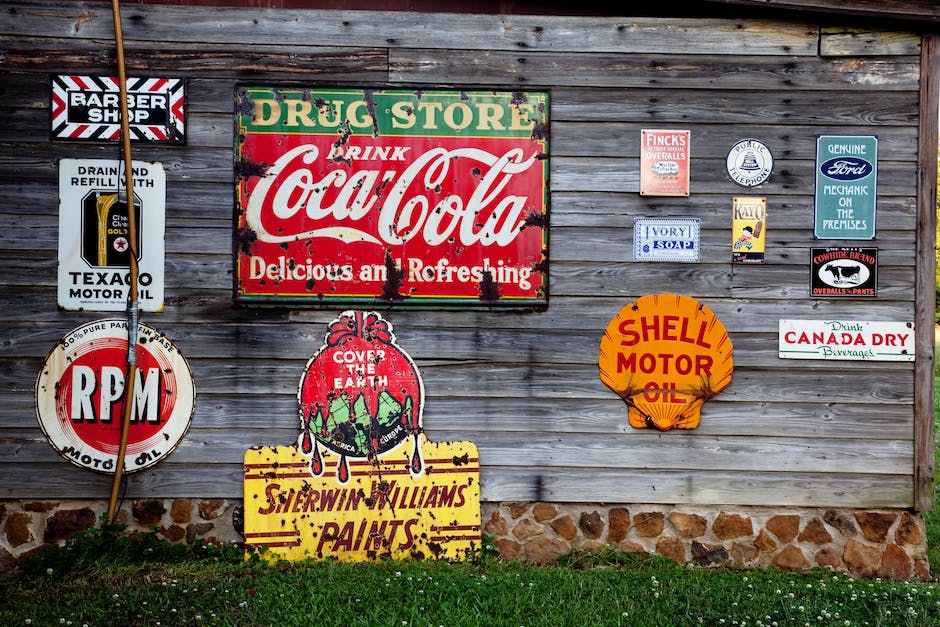
According to an interview with Business Insider, one of the people who coined the term marketing is Frank McKinney. He described it as promoting products or services through all means necessary, including advertising, public relations, sales promotions, motivating consumers to purchase the product, and creating a sense of urgency to buy.
He also mentioned that this type of marketing was done by big business back in his day and gave credit to William Edward Burroughs for popularizing the concept.
Burroughs referred to it as promotional activity- he said that corporations spend too much money on advertisements but not enough time talking about how to live a healthy life. This made perfect sense to him because he felt that companies wanted you to keep buying their products.